Judith A. Towle Environmental Studies Fund

Caribbean Sustainability

The Judith A. Towle Environmental Studies Fund was established at CFVI in 2003 in recognition of the commitment of Judith Towle to increasing environmental awareness in the Caribbean. Annual grants are awarded for innovative solutions that address shared environmental concerns in the insular Caribbean. While the proposed project may focus on a single island, it must have transboundary relevance. Funds can be used to support activities that include internships, research studies, workshops, seminars, lectureships, citizen science, or publications. Applications open in the fall each year and are reviewed by an advisory committee appointed by CFVI. Join our email list to be notified.

Application Information

Who Is Eligible?

Applications may be submitted by (1) individuals who are residents of the Caribbean and (2) not-for-profit institutions based in the Caribbean or working exclusively in the Caribbean. Graduate students may also submit applications for research projects focused on the insular Caribbean. Applications will NOT be accepted from for-profit organizations or from government entities.

Application Submission Deadline: September 15, 2025
Applicants will receive a confirmation email upon submission; please contact us if you do not receive a confirmation.

Award Criteria: Applications will be reviewed by an advisory committee appointed by CFVI. Applicants should note the following in preparing their submissions:

  1. The methodology employed and the anticipated results must demonstrate transboundary solutions that can be applied to shared environmental problems in the insular Caribbean.
  2. The Fund is seeking projects that are original and innovative. In addition, applicants are encouraged to propose projects that display on-the-ground results, particularly for enhancing local environmental knowledge and awareness.
  3. Priority will be given to projects that demonstrate ways to apply global environmental issues - such as biodiversity loss, climate change, and nature-based solutions - to local circumstances.
  4. For applications supporting a research activity, the Fund only supports applied research studies that prioritize practical applications. If the proposed research is a piece of a larger field of study, but one to be executed on a local island platform, the applicant should demonstrate a working knowledge of the broader field of research and how the proposed project fits within that field of study while accommodating local resources and capacity.

Application Format: Use the following ten (10) headers when preparing your proposal. All information requested within each header must be included. Please note that all proposals must follow this format.

  1. Project Title
  2. Name of Applicant (select one)
    Individual: Identify Individual
    Non-profit Institution: Identify Non-profit institution
  3. Contact Information: Name, address, telephone number(s) and email address of the applicant. If applicant is an institution, a contact person at the institution must be provided.
  4. Applicant Qualifications: A brief introduction to the applicant, highlighting the applicant’s qualifications for undertaking the proposed project.
  5. Short Summary of Project: A two or three sentence introduction that briefly summarizes the project and provides the reader with a quick overview.
  6. Proposed Activity: A fuller description of the proposed activity, including who will do what; the extent of local collaboration and partnership; and anticipated accomplishments, results, or products.
  7. Time Frame: Identify when the project will begin and end.
  8. How the proposed activity relates to the objective of the Towle Fund: Explain how the proposed activity furthers the overall purpose of the Towle Fund.
  9. Budget: Amount of money requested and how it will be expended.
  10.  References: Provide the names and contact information for 3 persons familiar with the applicant’s work and accomplishments. Also, include the institutional affiliation or field of expertise for each name submitted.

Supporting documentation may be submitted, not to exceed an additional three (3) pages. Documentation exceeding three pages will not be considered as part of the review process.

Application Process: Applications will be accepted as a single-file attachment, not to exceed four (4) single-spaced typed pages, sent via email to general.info@cfvi.net. Please use the subject line: Application for Judith Towle Environmental Studies Fund.

Grant Award: A grant will be made in 2025 not to exceed $12,000. The notification to the applicants will be made no later than October 15, 2025.

Questions about this grant opportunity should be directed to bethn@cfvi.net.


Award Recipients

2024 – St. Croix Science Teachers Association

The grant supported a youth-led project focused on environmental mitigation through community engagement. The initiative centered on Tan-Tan, a once-useful plant that has become invasive across the Virgin Islands, disrupting native ecosystems and increasing agricultural costs.

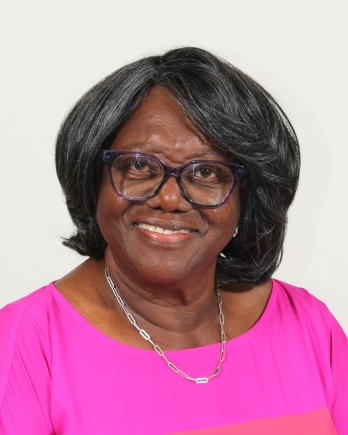
“Addressing the spread of Tan-Tan on farms and in parks is essential to reducing current and future human-ecosystem conflict in the territory,” said Rosa White Cromwell, president of the St. Croix Science Teachers Association (Farm) and author of the grant proposal.

Cromwell, a retired science educator and administrator with more than 40 years of service to the Virgin Islands Department of Education, now leads the association, which was founded in 1991 to engage youth in environmental and agricultural sciences.

With grant funding, 30 STEAM-focused students — from middle schools to the University of the Virgin Islands—were selected to lead a citizen science research project, supported by the Legislature’s Agriculture Committee, UVI’s School of Agriculture, and the Departments of Agriculture and Education.

Working across five farms in St. Croix’s Estate Bethlehem, La Grange, and Sion Farm, students conducted field research on the history and ecological impact of Tan-Tan. Their work included designing methodology, conducting surveys, analyzing data, and presenting findings and STEAM-based solutions at a public expo.
Rosa-0001.jpg
IMG_6315.jpg

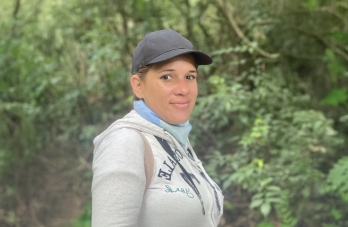
2023 – Optics for the Tropics/Ailen Anido Escalona, Cuba

The grant was used to support a comprehensive strategy to address bird trapping and illegal trade in Gibara, Cuba, which severely threaten biodiversity. The project incorporated data monitoring using eBird tools that tracked bird populations and trapping patterns, along with an educational awareness component that provided workshops for educators, and implemented the integration of bird conservation into school curriculum.

This initiative reached 1,079 students across urban and rural schools with a strong objective in promoting community engagement through various activities including birdwatching club. This project received recognition at the local and international level by supporting broader conservation initiatives across Cuba.

The project’s holistic approach promoted environmental education, biodiversity enforcement, and community involvement while effectively raising awareness and fostering collaboration. The impact marked progress in protecting Gibara’s avian biodiversity while emphasizing the need for enhanced regulatory measures.

2022 – Christian Torres Santana, Puerto Rico

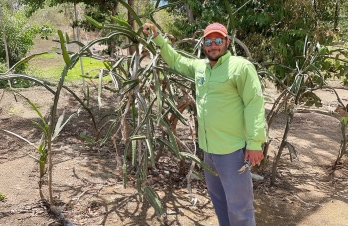
The grant was used to research and document 80 native coastal plant species suitable for Nature-based Solutions (NbS) in  erosion control, habitat restoration, and wildlife habitat efforts in Puerto Rico and the Caribbean. This project supported nursery development and specialized training in the propagation of native plants, nursery management, and restoration practices. Experts from Florida, California, and the Caribbean, networked and collaborated to enhance coastal restoration efforts, including the Naples Botanical Garden nursery which focuses on native coastal plant propagation, and the University of Puerto Rico at Mayagüez, which offers specialized training and development courses in pesticides and is developing a comprehensive plant list for restoration. Continued funding and partnerships will support the publication of the field guide and expanded nursery production for native coastal plants. According to Christian “This is only the beginning, as this project created a foundational resource that will continue to be used and expanded upon, making it my favorite impact story.”

Christian_and_Leptocereus_grantianus.jpeg

2021 – University of the Virgin Islands & H. Lavity Stoutt Community College
2020 – Haiti Ocean Project, Inc.
2019 – Kaira T. Fuentes-Viera, Puerto Rico

2018 – Environmental Protection in the Caribbean, St. Maarten, Netherlands Antilles
2017 – St. Kitts Sea Turtle Monitoring Network

2015 – Juliana Coffey and Alison DeGraff, Grenadines, St. Vincent

2014 – Dr. Renata Platenberg, University of the Virgin Islands
2013 – Stuart LaPlace, St. Kitts
2011 – Jost Van Dyke Preservation Society
2008 – Nevis Nice and Clean Program/Carlyn Lawrence

2007 – Sts Peter and Paul Catholic School/Volunteers of Lindqvist Beach

2006 – Friends of Virgin Islands National Park
2005 – St. Christopher Heritage Society